


Made with Olive Oil , Coconut Oil, Palm Oil, Sunflower Oil and Ultramarine Purple Pigment
- soft lavender
- medium purple
- deep violet
Click here to download the Step-by-Step PDF Guide!
Safety First: Working with Lye
- gloves
- safety glasses
- long sleeves
- closed toe shoes
- Apron
- Work in a well-ventilated area
- Keep children and pets away from your workspace
- Important Lye Safety Rules
- Always add lye to water
- Never add water to lye
- Avoid breathing lye fumes directly
- Use heat-safe containers only
- If lye touches skin, rinse immediately with cool running water
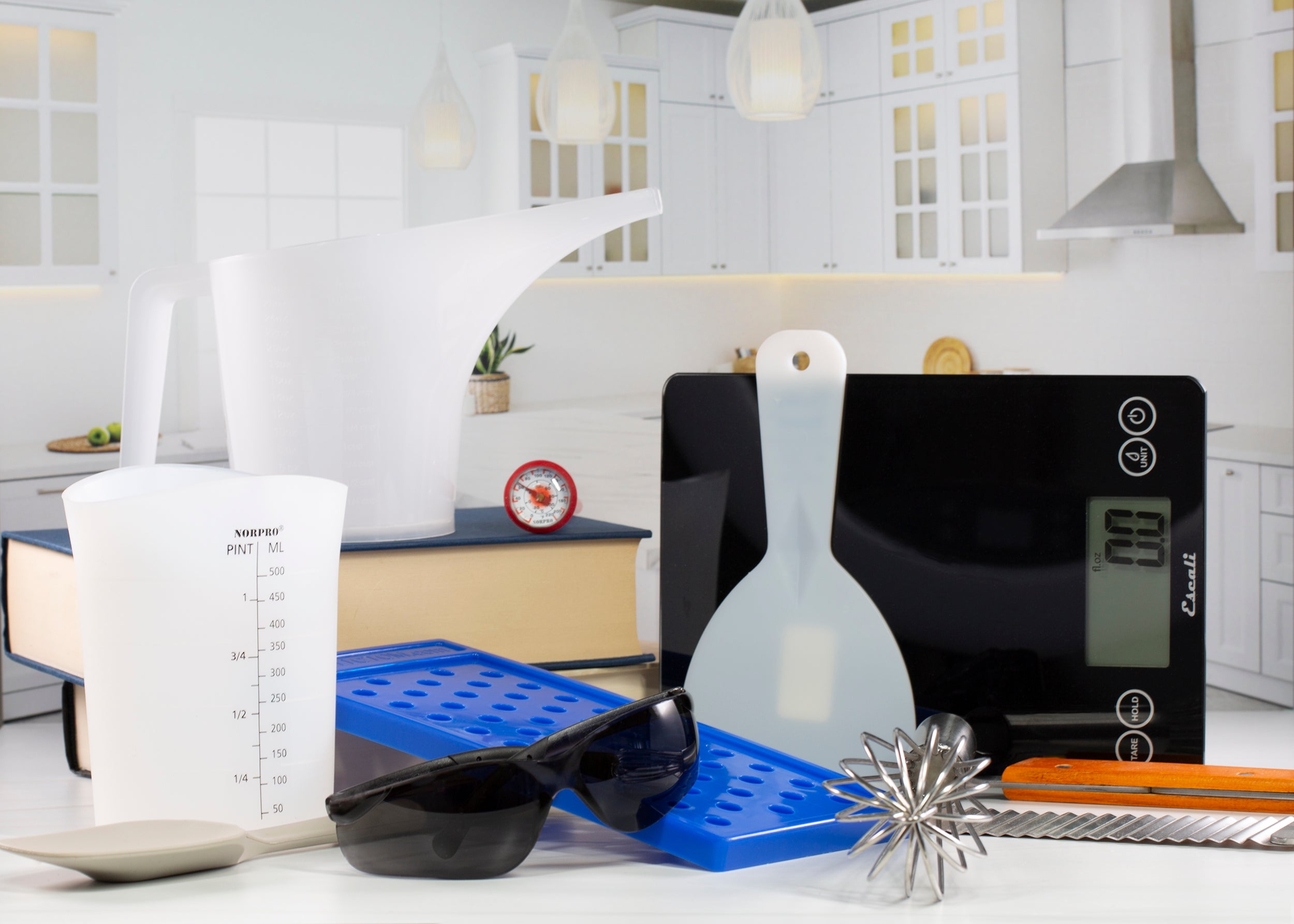
Recommended Equipment:
- Digital scale
- Stick blender
- Thermometer
- Regular Loaf Silicone Soap Mold
- Microwave-safe bowls or soap pot
- Small mixing cups
- Silicone spatulas
- 0.15 cc Plastic Scoop
- Isopropyl alcohol in spray bottle
- Cardboard box or towel for insulation
Formula:
Total: Approx. 1.8 kg / 4 lb batch
| Ingredient | Usage Rate (%) | Weight (g) |
| Olive Oil Pomace | 30 | 299 |
|
Palm Oil RBD- RSPO Certified |
25 | 249 |
|
Sunflower Oil - High Oleic |
25 | 249 |
| Coconut Oil 76° RBD | 20 | 199 |
| Distilled Water | 26.70 | 379 |
| Sodium Hydroxide(Lye) | 13.87 | 138 |
| Lavender (40/42) Essential Oil | 3 | 30 |
Colourants
- 15 g Distilled Water mixed with 3 g Water-Soluble Titanium Dioxide
- 8 g High Oleic Sunflower Oil mixed with 4 g Ultramarine Purple Pigment
Why This Formula Works Well for Swirling
Some soap formulas move very quickly, making detailed designs stressful or difficult to complete before the batter thickens. This formulation was intentionally designed to stay fluid longer, giving extra time for:
- drop swirls
- hanger swirls
- intricate layering
- in-the-pot designs
- multi-colour pours
The higher percentage of liquid oils helps slow trace while still creating a firm, long-lasting finished bar after cure. Lavender 40/42 essential oil is also a great choice for swirl projects because it behaves beautifully in cold process soap and does not typically accelerate trace.
Featured Ingredients:
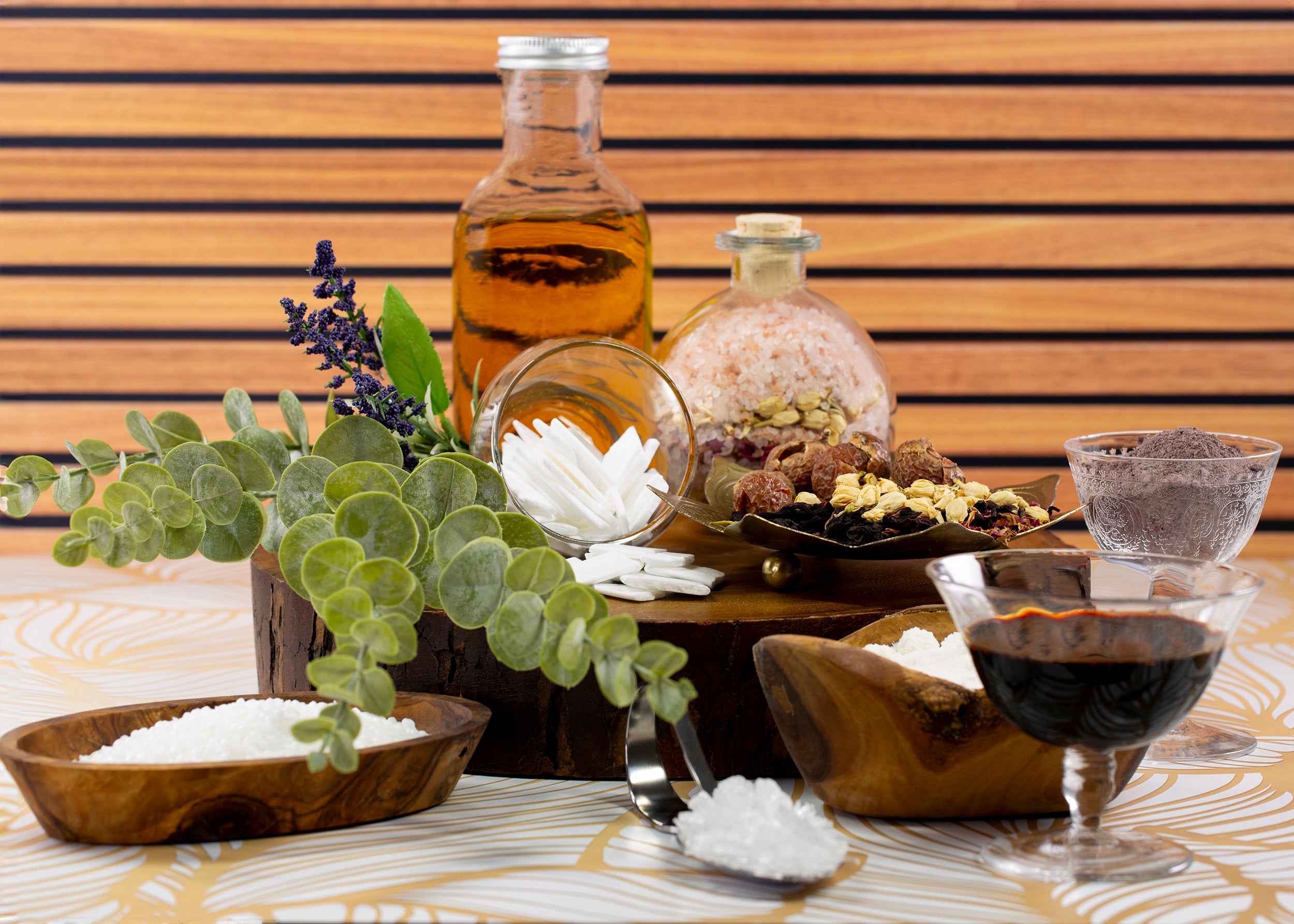
Olive Oil - Pomace
A classic soapmaking oil valued for its mild cleansing and conditioning properties. Its naturally slow trace behaviour helps keep soap batter fluid longer, making it especially useful for detailed swirl techniques like drop swirls while contributing a smooth, gentle skin feel.
Palm Oil RBD - RSPO Certified
Palm oil helps create a firm, stable, and long-lasting soap bar with creamy lather and balanced cleansing. In swirl formulations, it also supports structure while maintaining a workable trace for more intricate designs.
Sunflower Oil - High Oleic
A lightweight conditioning oil rich in oleic acid and vitamin E. It helps slow trace, improve batter fluidity, and create a silky skin feel, making it ideal for swirl-heavy cold process soap designs.
Coconut Oil 76 RBD
Coconut oil contributes cleansing power, hardness, and abundant bubbly lather to cold process soap. This refined version has a neutral aroma, allowing the essential oil blend and colour design to remain the focus of the finished bar.
Sodium Hydroxide (Lye)
Sodium hydroxide is the alkali required for saponification, the chemical reaction that transforms oils into soap. When properly formulated and fully cured, no active lye remains in the finished bar. Proper PPE and safe handling practices are essential during soapmaking.
Lavender (40/42) Essential Oil
A standardized lavender oil known for its consistent floral aroma and reliable soapmaking performance. Its calming scent profile pairs beautifully with the soft lavender and violet tones used throughout this drop swirl design.
Titanium Dioxide - Water Soluble
A mineral whitener used to create a bright white soap base and increase colour contrast within swirl designs. In this project, it helps the purple drop swirl pattern appear cleaner, brighter, and more defined.
Ultramarine Purple
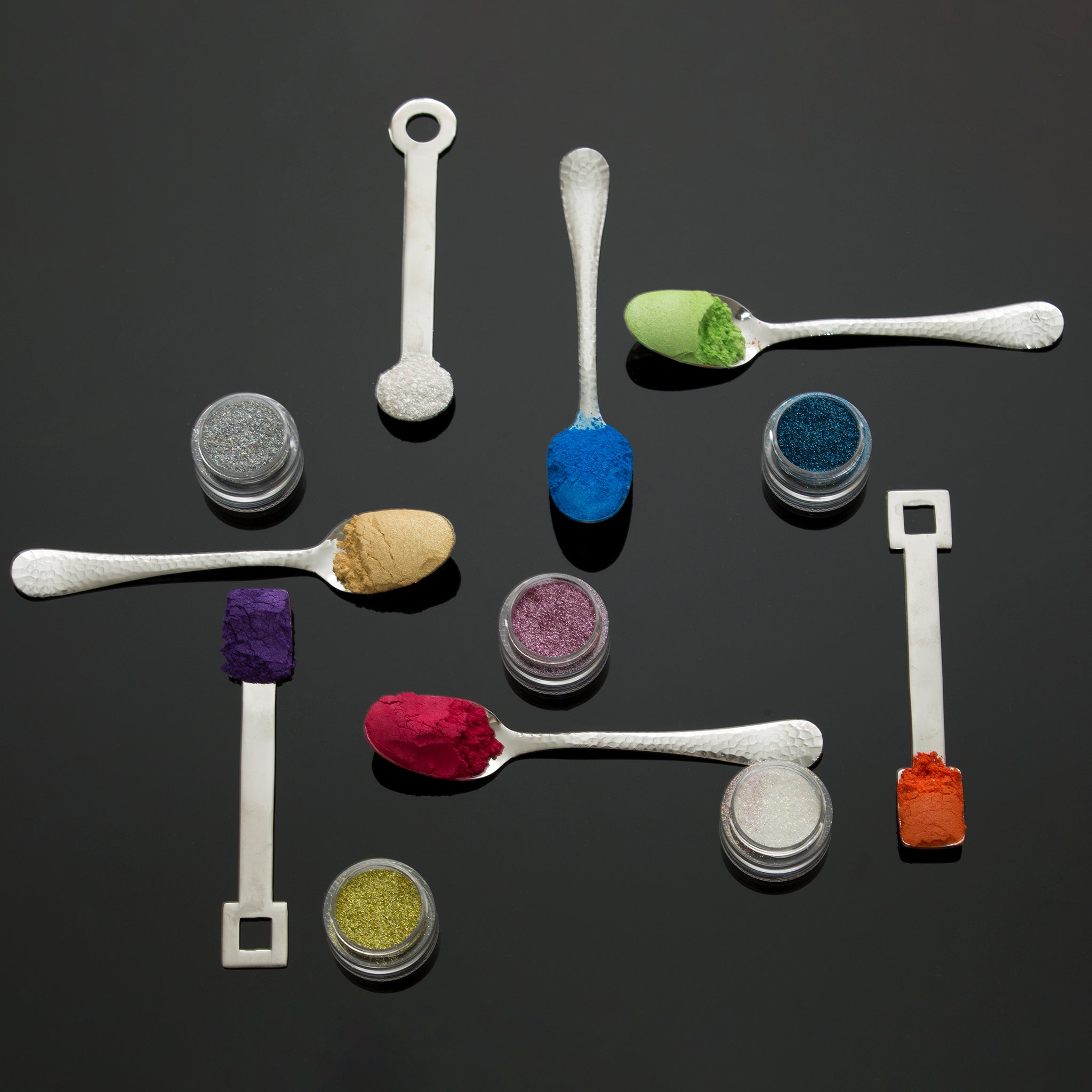
A concentrated mineral pigment used to create vibrant lavender and violet tones in cold process soap. In this project, multiple pigment concentrations were used to create depth, movement, and contrast throughout the drop swirl design.
Instructions:
Step 1: Prepare the Workspace. Put on all protective gear and gather all ingredients and tools before beginning. Measure and organize everything ahead of time for a smoother soap making process. Weigh into a large microwave-safe bowl the Olive Oil , Coconut Oil, Palm Oil, Sunflower Oil. Retain 8 g sunflower oil for the ultramarine slurry. Microwave in short bursts until fully melted. Stir well and set aside.
Step 2: Prepare the Ultramarine Slurry. Mix together:
- 8 g High Oleic Sunflower Oil
- 4 g Ultramarine Purple Pigment
Step 4: Prepare the Titanium Dioxide. Mix together 15 g Distilled Water and 3 g Water-Soluble Titanium Dioxide. Stir until smooth and lump-free. Set aside.
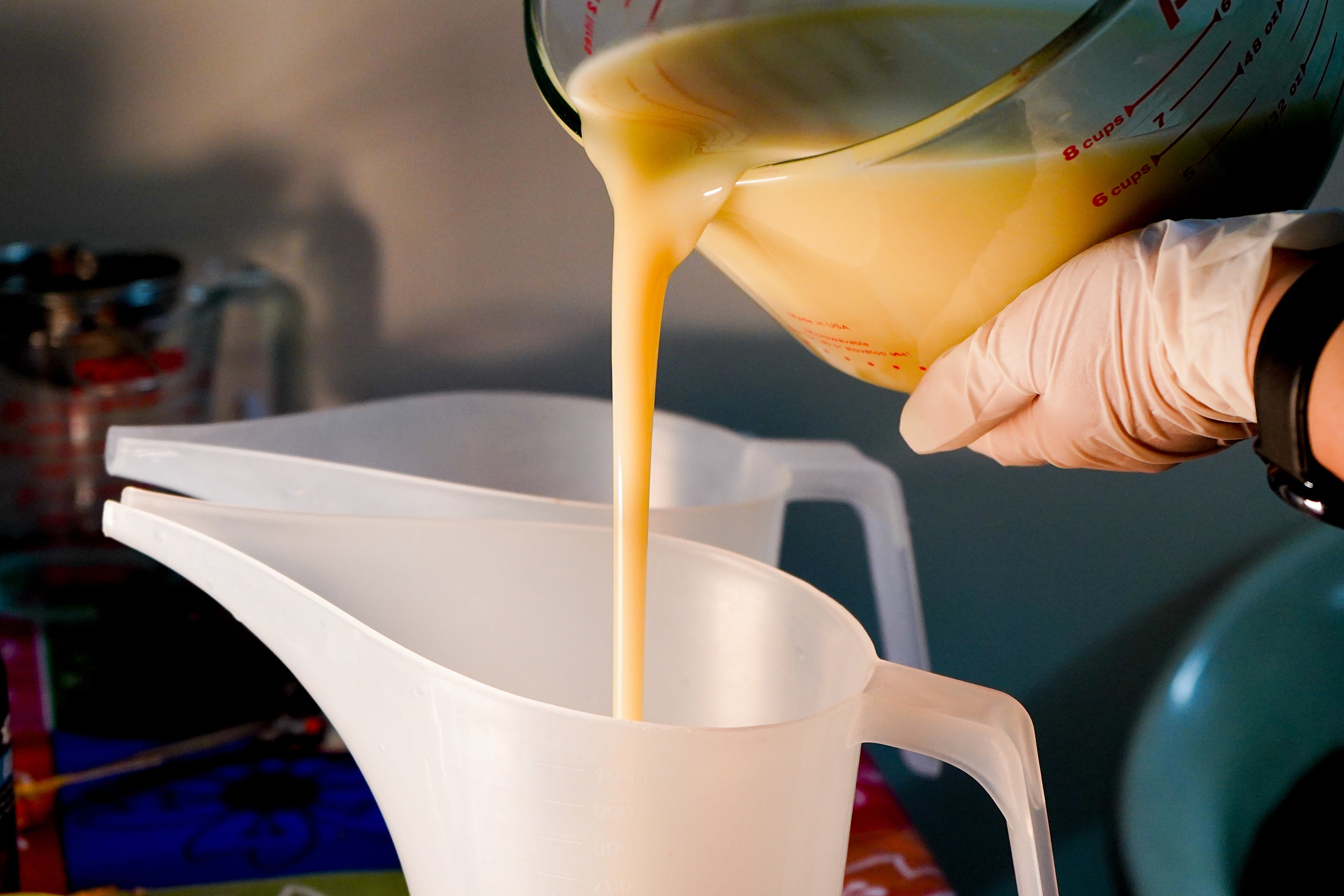
Step 5: Bring Soap to Light Trace. Once both the oils and lye solution are at approximately 110°F or lower: Slowly pour the lye solution into the oils. Begin stirring by hand first, then pulse with a stick blender for about 10–15 seconds. Blend only until light trace is reached. The batter should remain fluid and pourable.
Step 6: Add colour and Scent. Add the titanium dioxide mixture to the soap batter and blend briefly. Next, add: 31 g Lavender 40/42 Essential Oil. Mix thoroughly.
Step 7: Pour the Base Layer. Pour most of the white soap batter into the loaf mold, leaving approximately ½ inch of space at the top. Reserve enough batter to divide into three separate cups, 100 g soap batter in each cup.
Step 8: Create the Purple Shades. Into the three cups add:
Light Purple
- 1 g ultramarine slurry
- Approximate ultramarine purple usage level: ~0.33%
Medium Purple
- 3 g ultramarine slurry
- Approximate ultramarine purple usage level: ~1%
Deep Purple
- 7 g ultramarine slurry
- Approximate ultramarine purple usage level: ~2.33%
These scoop estimates are based on a standard 0.15 cc mini measuring spoon and are intended as approximate guides for makers.
Mix each portion thoroughly.
Step 9:Create the Drop Swirl. Begin pouring the purple soap portions into the mold from varying heights while moving lengthwise across the loaf. Pouring from:
- lower heights keeps colour closer to the surface
- higher heights pushes colour deeper into the soap
Step 10: Finish and Insulate. Once all batter has been poured, you may texture the top if desired, or leave it smooth. Spray the surface lightly with isopropyl alcohol to help reduce soda ash. Cover the mold with a cardboard box or towel. For this batch, a heating pad was placed underneath the mold to encourage gel phase.
Step 11: Unmold and Cure. Allow the soap to rest in the mold for approximately 24 hours. Unmold and cut into bars. The inside will reveal flowing ribbons of lavender and violet drop swirl patterns. Place bars in a cool, dry area with airflow and allow them to cure for 4 to 6 weeks. This curing time allows excess water to evaporate, creating a harder, longer-lasting soap bar with a milder feel on the skin.
Beginner Soapmaking Tips
Understanding Trace
Trace refers to the thickness of soap batter after the oils and lye solution are mixed together.
A light trace looks similar to thin cake batter or warm custard. The soap batter will still pour easily and smoothly, but when drizzled across the surface, it may leave a faint line or “trace” for a moment before sinking back in. At light trace, the batter remains fluid enough for swirling, layering, and pull-through techniques.
A medium trace becomes slightly thicker, similar to pudding or gravy. The batter will still pour, but more slowly, and patterns or drizzles on the surface will remain visible longer before settling back in.
A heavy trace is thick and no longer easily pourable. The batter holds its shape and is better suited for textured finishes such as spoon textures or peaked tops on soap bars.
Temperature & Trace
Soapmaking temperatures can affect how quickly the batter thickens.
-
Lower temperatures generally slow down trace and provide more working time
-
Higher temperatures can cause soap batter to thicken more quickly
For this project, allowing both the oils and lye solution to cool to approximately 100°F (38–43°C) helps maintain a smooth, workable batter for detailed pouring techniques.
Stick Blending
Stick blending too long can quickly thicken soap batter. Use short bursts of blending followed by hand stirring to help maintain a fluid consistency throughout the design process.
Prepare Before Starting
Having colourants pre-mixed and all ingredients measured before beginning helps the soapmaking process move more smoothly and reduces the chance of the batter thickening too quickly.
Storage & Cure Tips
For best results, allow cold process soap to cure for approximately 4–6 weeks before use. Proper curing allows excess water to evaporate, producing a harder, longer-lasting bar with improved lather quality and mildness.
Store finished soap in a cool, dry environment away from excessive humidity and direct sunlight to help preserve colour, scent, and overall bar quality.
Note:
These formulations are provided as a general guide for personal or commercial applications. Voyageur Soap & Candle Company Ltd. accepts no liability for the performance, effectiveness, or outcomes of products made using these formulations.
Users are responsible for conducting their own testing, following safe formulation practices, and ensuring compliance with all applicable regulations.
For formulation questions, please contact customer service at customerservice@voyageursoapandcandle.com or call 1-800-758-7773.